

 English
 Deutsch
 italiano
 中文简体
中文简体
Author: Admin Date: 2026-06-02
How Do Brushless DC Motors Work and Why Are They Replacing Brushed Motors?
Content
- 1 What Is a Brushless DC Motor and How Does It Work?
- 2 Brushless vs Brushed DC Motors: A Direct Comparison
- 3 Key Types of Brushless DC Motor Configurations
- 4 Where Brushless DC Motors Are Used and Why They Dominate
- 5 Critical Parameters When Selecting a Brushless DC Motor
- 6 Thermal Management and Long-Term Reliability
What Is a Brushless DC Motor and How Does It Work?
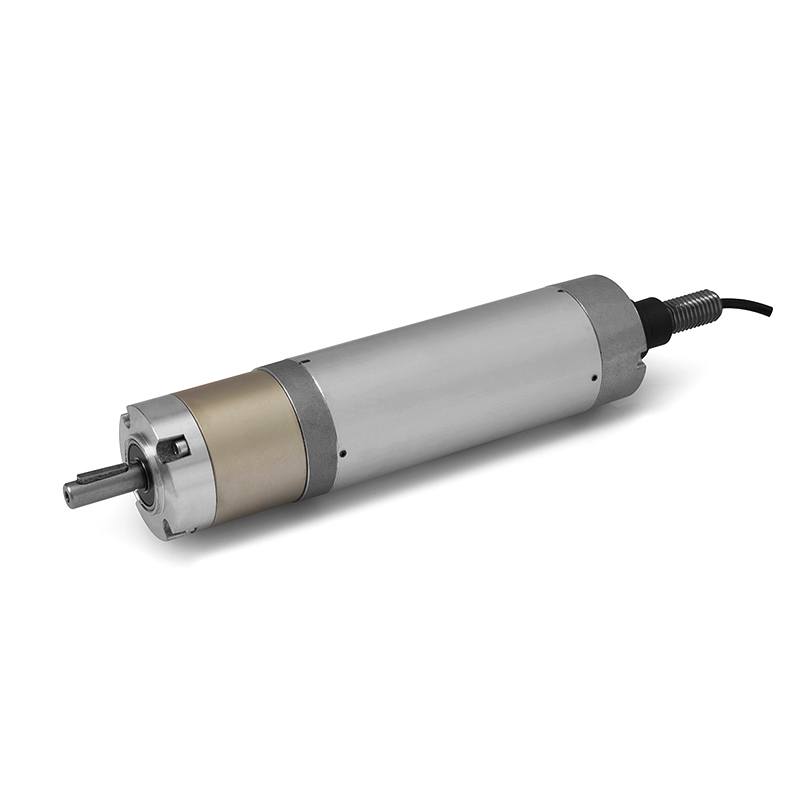
A brushless DC motor (BLDC motor) is an electric motor that uses electronic commutation rather than mechanical brushes and a commutator to switch the direction of current through its windings. In a conventional brushed DC motor, carbon brushes make physical contact with a rotating commutator to deliver current to the armature coils — a system that generates friction, heat, and wear over time. A brushless motor eliminates this mechanical contact entirely by moving the permanent magnets to the rotor and placing the electromagnet windings on the stationary stator. A dedicated electronic controller — typically called an ESC (electronic speed controller) or motor driver — manages the switching of current through the stator coils in precise sequence, generating a rotating magnetic field that the permanent magnet rotor follows.
The commutation process in a brushless motor relies on rotor position feedback to determine which stator coils to energize at any given moment. Most BLDC motors use Hall effect sensors embedded in the stator to detect the rotor's magnetic field position and relay that information to the controller. Some higher-performance systems use sensorless commutation, where the controller infers rotor position from back-EMF (electromotive force) generated by the rotating magnets — eliminating the sensors entirely and simplifying the motor assembly. The result in both cases is smooth, efficient, and electronically controlled rotation without any mechanical wear at the commutation point.
Brushless vs Brushed DC Motors: A Direct Comparison
Understanding where brushless motors excel requires a direct comparison against brushed motors across the performance metrics that matter most in engineering and product design decisions.
| Property | Brushless DC Motor | Brushed DC Motor |
| Efficiency | 85% – 95% | 70% – 85% |
| Lifespan | Very long (no brush wear) | Limited by brush degradation |
| Maintenance | Minimal | Regular brush replacement needed |
| Noise and Vibration | Low | Moderate to high |
| Speed Control Precision | Very high | Moderate |
| Power Density | High | Moderate |
| Initial Cost | Higher | Lower |
| Controller Required | Yes (electronic) | No (simple DC supply sufficient) |
The efficiency advantage of brushless motors is one of their most commercially significant attributes. A brushless motor converting 90% of electrical input into mechanical output versus a brushed motor converting 78% means substantially longer battery runtime in portable applications — a critical factor in electric vehicles, drones, and cordless power tools where energy density is always constrained. The absence of brushes also eliminates the sparking that occurs at brush-commutator contact points, making brushless motors inherently safer in environments with flammable gases or dust — an important consideration in industrial settings.
Key Types of Brushless DC Motor Configurations
Brushless DC motors are not a single uniform design — they come in several distinct physical configurations that suit different application requirements. Understanding the main types helps engineers and product developers select the right motor geometry for their specific use case.
Inrunner Motors
In an inrunner configuration, the rotor is located inside the stator — the same physical arrangement as a traditional motor. The permanent magnets are mounted on the inner rotating shaft, and the stator windings surround them on the outside. Inrunner motors produce high rotational speeds and are compact in diameter, making them well-suited for applications where speed is more important than torque, such as RC aircraft, high-speed spindles, and turbocharger systems. They typically require a gearbox when high torque at lower speeds is needed.
Outrunner Motors
In an outrunner configuration, the permanent magnets are mounted on an outer rotating shell that surrounds the stationary stator windings at the center. This inverted geometry allows a much larger rotor diameter, which generates significantly higher torque at lower RPM without gearing. Outrunner motors are extremely popular in drone propulsion, electric bicycles, and direct-drive applications because they can drive propellers or wheels efficiently at moderate speeds without transmission losses. Their wider form factor is a trade-off that most drone and e-bike applications can accommodate easily.
Axial Flux Motors
Axial flux motors arrange the stator and rotor as flat discs facing each other, with magnetic flux flowing parallel to the motor shaft rather than radially through it. This geometry produces exceptionally high power density and torque-to-weight ratio in a very thin package. Axial flux brushless motors are increasingly used in high-performance electric vehicle drivetrains and premium e-bikes where space and weight constraints are stringent. They are more complex to manufacture than radial flux designs and carry a higher cost, but their performance characteristics make them attractive for demanding applications where every gram and millimeter matters.
Where Brushless DC Motors Are Used and Why They Dominate
The combination of high efficiency, long operational life, low noise, and precise electronic speed control has made brushless DC motors the preferred choice across a remarkably wide range of industries and product categories. Their penetration continues to expand as controller electronics become cheaper and more integrated.
- Electric vehicles (EVs) and hybrid vehicles use high-power brushless motors for traction drives, where efficiency directly translates to driving range per charge. Regenerative braking capability — where the motor acts as a generator during deceleration — is a further advantage enabled by the motor's electronic control system.
- Drones and unmanned aerial vehicles rely almost exclusively on outrunner brushless motors for their combination of high thrust-to-weight ratio, speed precision, and reliability. Quadcopter stability depends on each motor responding identically and instantly to controller commands — a task brushless systems handle far better than brushed alternatives.
- Cordless power tools including drills, circular saws, and impact drivers have shifted heavily toward brushless motors because they extract more work per battery charge, run cooler, and last significantly longer than brushed equivalents in the same tool formats.
- HVAC systems use brushless motors in fans and blowers where variable speed operation across a wide RPM range is required. Electronically commutated motors (ECMs) — a type of BLDC — are the standard in energy-efficient residential and commercial air handling systems.
- Industrial robotics and CNC machinery demand precise, repeatable motion control that brushless servo motors deliver. The ability to hold exact position, accelerate and decelerate with fine control, and maintain torque at low speeds makes BLDC motors essential in automated manufacturing equipment.
- Medical devices including surgical robots, infusion pumps, and imaging equipment require motors that operate quietly, reliably, and with extreme precision — all characteristics where brushless designs are unmatched by brushed alternatives.
- Consumer electronics such as hard disk drives, cooling fans, and optical disc drives have used brushless motors for decades because of their low noise, long life, and compact size relative to the output they provide.
Critical Parameters When Selecting a Brushless DC Motor
Selecting the correct brushless motor for a given application requires evaluating several interdependent specifications. Getting these parameters right at the design stage prevents performance shortfalls and costly revisions later.
KV Rating
The KV rating of a brushless motor expresses the number of revolutions per minute (RPM) the motor produces per volt of applied voltage with no load. A motor rated at 1000 KV will spin at approximately 10,000 RPM when supplied with 10 volts. Low KV motors (100–500 KV) produce high torque at low speeds and are suited for direct-drive applications like large drone propellers or electric longboards. High KV motors (2000+ KV) spin very fast and suit applications requiring high rotational speed, such as small aircraft props or high-speed spindles. Matching KV to the operational voltage and required RPM range is one of the first steps in motor selection.
Continuous and Peak Current Ratings
Every brushless motor has a continuous current rating — the maximum current it can sustain indefinitely without overheating — and a peak current rating it can tolerate briefly during startup or high-load moments. Selecting a motor whose continuous rating matches or exceeds the expected sustained operating current, with sufficient peak headroom for transient demands, is essential for long-term reliability. Operating consistently above the continuous current rating leads to winding insulation degradation and premature motor failure.
Stator Size and Winding Configuration
The stator dimensions — particularly its diameter and height (referred to as the stator width and stator height in the industry) — fundamentally determine the motor's torque and power potential. A larger stator diameter creates more magnetic flux interaction and higher torque capability. Winding configuration (the number of turns per coil and wire gauge) determines the motor's resistance, which affects efficiency and heat generation. Motors with fewer turns of thicker wire have lower resistance and suit high-current, high-speed applications, while motors with more turns of thinner wire suit lower-current, higher-torque applications at moderate speeds.
Thermal Management and Long-Term Reliability
Although brushless motors eliminate brush wear as a failure mode, heat remains the primary enemy of motor longevity. The stator windings generate resistive heat during operation, and the permanent magnets can demagnetize partially if exposed to sustained high temperatures — typically above 80°C to 150°C depending on the magnet material used. Neodymium magnets, which offer the highest flux density and are used in most high-performance BLDC motors, are more temperature-sensitive than ferrite magnets and require careful thermal management in high-duty-cycle applications.
Effective thermal management strategies include selecting motors with appropriate continuous power ratings for the application, ensuring adequate airflow over the motor housing, using thermally conductive mounting arrangements that conduct heat away from the stator, and incorporating temperature sensing with controller-level current limiting that reduces output before critical temperatures are reached. In sealed environments where convective cooling is limited, liquid-cooled motor jackets or thermally optimized motor housings with integrated heat spreaders are used in demanding industrial and automotive applications. Treating thermal management as an integral part of motor system design — rather than an afterthought — is what separates robust, long-service installations from those that fail prematurely despite using quality hardware.

-
Feedback
Related products

Hotline:0086-15869193920
Time:0:00 - 24:00
