

 English
 Deutsch
 italiano
 中文简体
中文简体
Author: Admin Date: 2025-12-11
What Is the Difference Between AC Geared Motors and DC Geared Motors?
Content
- 1 Introduction: Why the Distinction Matters
- 2 Basic Electrical and Mechanical Principles
- 3 Torque, Speed, and Performance Characteristics
- 4 Control Systems and Electronics
- 5 Efficiency, Heat, and Energy Consumption
- 6 Reliability, Maintenance, and Lifespan
- 7 Application Suitability and Industry Examples
- 8 Selection Guide: How to Choose Between AC and DC Geared Motors
- 9 Installation, Common Pitfalls, and Troubleshooting
- 10 Cost Considerations and Total Cost of Ownership (TCO)
- 11 Practical Recommendations and Final Checklist
- 12 Conclusion
Introduction: Why the Distinction Matters
Choosing between an AC geared motor and a DC geared motor is more than a matter of electrical preference — it affects system performance, control complexity, lifecycle cost, and suitability for specific applications. This article provides a practical, technical, and application-focused comparison to help engineers, technicians, and purchasers make informed decisions. We examine electrical principles, mechanical architecture, torque and speed behavior, control and drive options, efficiency, maintenance, and real-world selection rules.
Basic Electrical and Mechanical Principles
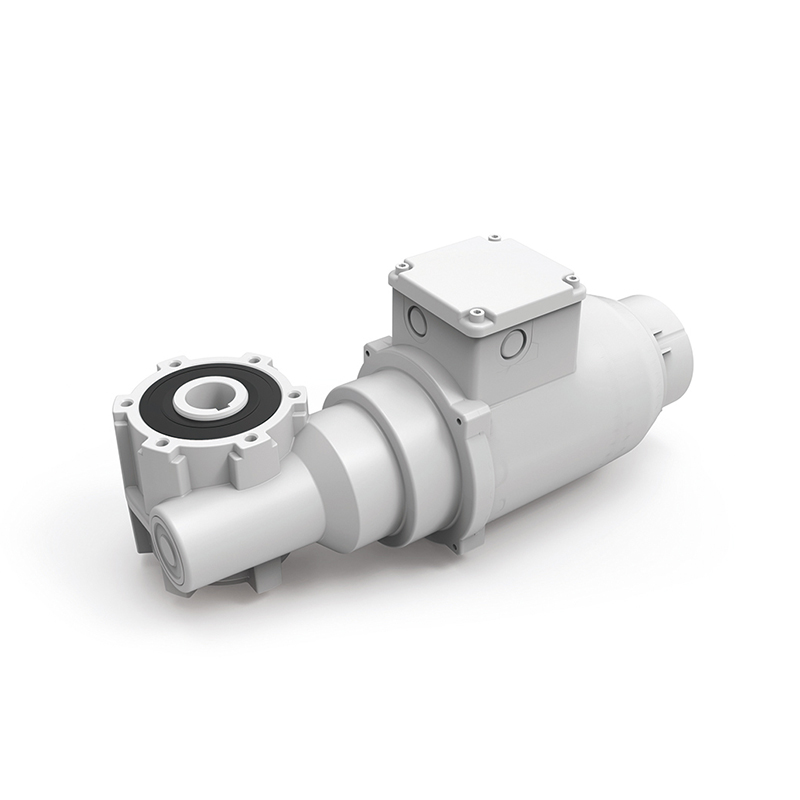
AC geared motors are driven by alternating current and typically pair an AC induction or synchronous motor with a gearbox. They leverage the fixed-frequency nature of mains power or frequency-converted power (via VFDs) to produce rotational motion. DC geared motors, by contrast, use direct current and are commonly built from brushed DC or brushless DC (BLDC) motor variants mated to a gearbox. The DC architecture inherently makes torque control and low-speed operation simpler without frequency conversion.
Construction differences
Mechanically, both motor types share the gearbox designs — spur, helical, worm, planetary — but differ in the motor internals: AC motors use windings and often a squirrel-cage rotor or permanent magnets (in synchronous types), while DC motors use armatures with commutators (brushed) or electronic commutation (BLDC). The presence or absence of brushes affects maintenance, electrical noise, and lifetime.
Torque, Speed, and Performance Characteristics
Torque delivery and speed behavior are primary differentiators. DC motors provide high starting torque and a near-linear torque-to-current relationship, making them easy to control for low-speed, high-torque tasks. AC motors, particularly induction motors, usually produce lower starting torque unless designed specifically for that purpose; however, when paired with a gearbox and VFD they can achieve precise speed and torque profiles across a wide range.
Speed control and dynamic response
DC geared motors offer immediate torque response with simple voltage or PWM control. BLDC types, combined with electronic controllers, provide excellent dynamic response and high efficiency. AC geared motors require an inverter or variable-frequency drive (VFD) for smooth variable-speed operation; modern VFDs deliver precise control but add system complexity, cost, and the need for appropriate filtering to prevent electrical interference.
Control Systems and Electronics
Control complexity differs markedly: DC motors can often be controlled with relatively simple drivers (voltage regulators, PWM controllers), making them a go-to when rapid, low-cost control is needed. AC motors rely on frequency and voltage control for speed regulation; this means an external drive (VFD) that synthesizes variable-frequency AC. For precision motion control, both systems can use closed-loop encoders, but AC systems commonly integrate with industrial automation via VFDs and PLCs.
Regeneration and braking
DC motors (especially BLDC) and AC servo systems can both support regenerative braking, returning energy to the supply with suitable drives. Simple brushed DC systems usually dissipate braking energy as heat unless fitted with regenerative electronics. VFD-equipped AC systems may require regenerative-capable drives and DC bus handling hardware to capture returned energy, increasing upfront complexity but enabling energy savings in cyclic applications.
Efficiency, Heat, and Energy Consumption
Efficiency depends on motor topology, speed, load, and gearbox losses. Modern AC induction motors are highly efficient at or near rated speeds and loads, and synchronous permanent-magnet motors provide excellent efficiency across ranges. BLDC motors typically offer high peak efficiencies and favorable part-load behavior. Gearbox selection (helical vs worm) also materially affects system efficiency; worm gears often introduce higher losses at the gearbox stage, regardless of motor type.
Reliability, Maintenance, and Lifespan
Maintenance needs diverge primarily due to brushes, bearings, and electronic drives. Brushed DC geared motors require periodic brush replacement and commutator upkeep, increasing scheduled maintenance. Brushless DC and AC motors eliminate brushes, reducing mechanical wear points. However, AC systems with VFDs introduce electronic components susceptible to heat and voltage spikes, requiring cooling and harmonic mitigation. Lifecycle cost analysis should include motor mean-time-between-failure (MTBF), drive electronics reliability, and gearbox service intervals.
Application Suitability and Industry Examples
- AC Geared Motors: favored in continuous-duty, mains-powered industrial applications such as conveyors, pumps, HVAC dampers, and heavy machinery where stable speed and robust construction matter.
- DC Geared Motors: preferred in battery-powered, mobile, or precision low-speed applications like robotics, electric vehicles, automated packaging, and tasks requiring high starting torque.
- Hybrid use cases: many systems mix both — AC-driven mainline equipment with DC or BLDC actuators for fine positioning or mobile implements.
Selection Guide: How to Choose Between AC and DC Geared Motors
Selecting the right motor depends on criteria such as power source (mains vs battery), required control precision, starting torque, duty cycle, ambient conditions, lifecycle cost targets, and space constraints. Below is a compact comparison table to aid quick decisions.
| Parameter | AC Geared Motor | DC Geared Motor |
| Power Source | Mains (single/three-phase) | Battery or DC supply |
| Starting Torque | Moderate (better with VFD) | High (especially DC series/BLDC) |
| Speed Control | Requires VFD for variable speed | Simple with voltage/PWM drivers |
| Maintenance | Low mechanical, but drive electronics | Brushless: low; Brushed: higher maintenance |
| Typical Uses | Conveyors, pumps, HVAC, mixers | Robotics, EVs, actuators, portable devices |
Installation, Common Pitfalls, and Troubleshooting
- Ensure proper matching between gearbox ratio and motor torque curve; undersizing leads to overheating and premature failure.
- For AC systems with VFDs, add line reactors or filters to reduce harmonics and protect sensitive electronics.
- For brushed DC motors, schedule brush inspections and maintain clean commutator surfaces to avoid electrical noise and wear.
- Address gearbox lubrication and backlash; choose the right lubricant viscosity for operating temperature and load cycles.
Cost Considerations and Total Cost of Ownership (TCO)
Initial cost comparisons often favor AC motors for high-power mains-connected installations due to lower motor cost per kW. But TCO depends on control equipment (VFDs), energy consumption, maintenance intervals, and downtime risk. DC systems may be more economical for low-voltage or battery-powered projects because they avoid the need for inverters and can provide better part-load efficiency in some scenarios.
Practical Recommendations and Final Checklist
- If mains power is available and the application runs at constant speed, an AC geared motor is usually the robust, cost-effective choice.
- If precise low-speed torque, battery operation, or rapid dynamic response is required, opt for a DC (preferably brushless) geared motor with an appropriate driver.
- Always size for continuous torque with a safety margin, check gearbox service factors, and validate thermal performance under real-world duty cycles.
Conclusion
AC and DC geared motors each have clear strengths: AC systems excel in mains-powered, continuous-duty environments with mature VFD ecosystems, while DC systems shine where high starting torque, low-speed control, or battery operation are essential. The best choice balances electrical availability, control complexity, maintenance capacity, efficiency goals, and total lifecycle cost. Use the selection checklist and comparison table above to match motor topology to your application, and always validate selections with real load testing and vendor performance curves.

-
Feedback
Related products

Hotline:0086-15869193920
Time:0:00 - 24:00
