

 English
 Deutsch
 italiano
 中文简体
中文简体
Author: Admin Date: 2026-04-22
Brush DC Motors vs Brushless DC Motors: Which Should You Choose?
Content
- 1 How Brush and Brushless DC Motors Work
- 2 Head-to-Head Performance Comparison
- 3 Efficiency and Thermal Performance in Detail
- 4 Lifespan, Maintenance, and Total Cost of Ownership
- 5 Speed Control and Dynamic Response
- 6 Application Suitability: Where Each Motor Type Excels
- 7 Making the Final Selection: A Practical Decision Framework
How Brush and Brushless DC Motors Work
Before comparing performance, it is essential to understand the fundamental mechanical and electrical differences between these two motor types, since the operational principle of each directly determines its strengths and limitations in real-world applications.
How Brush DC Motors Operate
A brush DC motor generates rotation through electromagnetic interaction between a stationary permanent magnet stator and a rotating armature (rotor) wound with copper coils. The critical component in this design is the commutator — a segmented copper ring mounted on the rotor shaft — which works in conjunction with carbon brushes to continuously switch the direction of current flowing through the armature coils as the rotor turns. This mechanical commutation maintains the correct polarity relationship between the rotor's magnetic field and the stator's field, sustaining continuous rotation. The brushes are spring-loaded carbon blocks that maintain physical contact with the spinning commutator, which is the source of both the motor's simplicity and its primary wear mechanism.
How Brushless DC Motors Operate
A brushless DC (BLDC) motor eliminates the mechanical commutator and brushes entirely by inverting the traditional motor architecture. In a BLDC motor, the permanent magnets are mounted on the rotor while the copper windings are located on the stationary stator. Commutation — the switching of current between stator winding phases to maintain continuous rotation — is performed electronically by an external motor controller using signals from Hall effect sensors or back-EMF detection to determine rotor position. This electronic commutation removes all sliding mechanical contacts from the power circuit, which fundamentally changes the motor's efficiency, lifespan, and maintenance profile.
Head-to-Head Performance Comparison
Comparing brush and brushless DC motors across the key performance dimensions most relevant to engineering and purchasing decisions reveals a clear pattern: brushless motors lead in most technical metrics, while brush motors retain meaningful advantages in cost and control simplicity. The table below summarizes the comparison across the most critical categories.
| Parameter | Brush DC Motor | Brushless DC Motor |
| Efficiency | 75–85% | 85–95% |
| Typical Lifespan | 1,000–3,000 hours | 10,000–20,000+ hours |
| Maintenance | Regular brush/commutator service | Minimal (bearing service only) |
| Motor Unit Cost | Low | Medium–High |
| Controller Complexity | Simple (voltage/PWM) | Complex (ESC/dedicated driver) |
| Noise (Electrical) | High (brush arcing EMI) | Low |
| Speed Control | Simple voltage adjustment | Precise electronic control |
| Heat Generation | Higher (brush friction losses) | Lower (no friction losses) |
| Power-to-Weight Ratio | Moderate | High |
| Use in Explosive Environments | Not recommended (spark risk) | Safe (no arcing) |
Efficiency and Thermal Performance in Detail
Efficiency is one of the most consequential differences between brush and brushless DC motors, particularly in battery-powered, high-duty-cycle, or thermally constrained applications. Brush DC motors lose energy through two mechanisms that brushless motors avoid entirely: brush friction, which generates heat at the commutator interface, and brush contact resistance, which causes additional voltage drop and power dissipation. These losses are continuous and proportional to motor speed, meaning efficiency degrades progressively as operating speed increases.
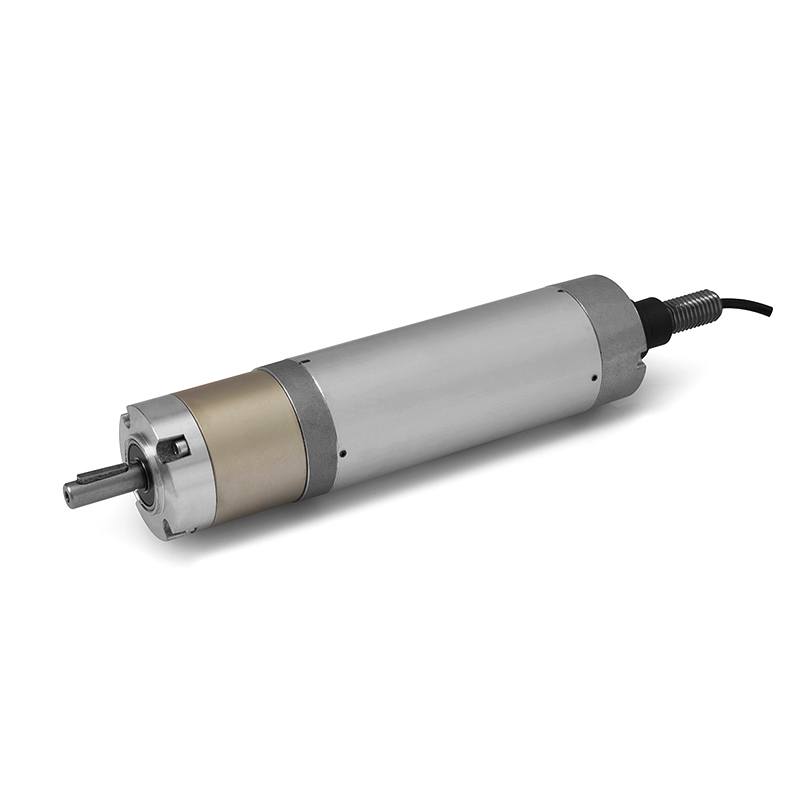
Brushless DC motors, with no mechanical contacts in the power path, eliminate both friction and contact resistance losses. Their windings are located on the stator, which is directly in contact with the motor housing — making heat dissipation to the external environment far more effective than in brush motors where the heat-generating armature is buried inside the rotating assembly. This thermal advantage allows BLDC motors to sustain higher continuous power outputs without overheating, making them the default choice in applications where motors operate at or near rated load for extended periods, such as electric vehicles, HVAC compressors, and industrial automation drives.
Lifespan, Maintenance, and Total Cost of Ownership
The lifespan gap between brush and brushless DC motors is substantial and has direct implications for total cost of ownership calculations, particularly in high-duty-cycle industrial and commercial applications. Understanding where this gap comes from — and when it matters — is critical to making economically sound motor selection decisions.
Brush Motor Wear Mechanisms
In a brush DC motor, the carbon brushes wear gradually through constant sliding contact with the commutator surface. As brushes wear down, contact pressure changes, commutator grooves develop, and electrical resistance at the interface increases — all of which degrade performance and eventually cause motor failure. Typical brush replacement intervals range from 500 to 2,000 operating hours depending on load, speed, and environmental conditions. Additionally, the commutator surface itself accumulates carbon deposits and develops wear grooves that require periodic cleaning or machining. In demanding applications, these maintenance requirements translate to significant cumulative labor costs and planned downtime.
Brushless Motor Maintenance Profile
Brushless DC motors have no wear components other than their bearings. In clean environments with proper bearing lubrication, BLDC motors routinely achieve 15,000 to 20,000 hours of continuous operation before any maintenance intervention is required. This dramatically lower maintenance burden is a primary driver of BLDC adoption in applications where access for maintenance is difficult or costly — such as ceiling fans, HVAC units, embedded industrial drives, and medical equipment. While the higher upfront motor and controller cost of a BLDC system may seem prohibitive, the elimination of recurring brush replacement costs and unplanned downtime typically delivers a favorable total cost of ownership within 2–3 years of continuous operation compared to a brush motor alternative.
Speed Control and Dynamic Response
Both motor types support variable speed operation, but the mechanisms, precision, and dynamic performance available differ meaningfully and affect suitability for applications requiring tight speed or torque regulation.
Brush DC motors offer inherently simple speed control: applying a variable DC voltage or using pulse-width modulation (PWM) to adjust effective voltage is sufficient to change motor speed. This simplicity makes brush motors attractive for low-cost applications where a basic H-bridge driver circuit and a microcontroller PWM output are all the control electronics required. However, brush motor speed regulation under varying load is relatively coarse without closed-loop feedback, and commutator noise introduces ripple into the speed signal that complicates high-resolution control.
Brushless DC motors require an electronic speed controller (ESC) or dedicated three-phase motor driver that sequences current through the stator windings based on rotor position feedback. While this adds system complexity and cost, it also enables significantly more precise speed and torque control, including closed-loop regulation with encoders or resolvers. The absence of brush-induced torque ripple gives BLDC motors exceptionally smooth rotation at all speeds — a critical advantage in precision motion applications such as CNC spindles, robotic joints, camera gimbals, and medical pumps where speed uniformity directly affects output quality.
Application Suitability: Where Each Motor Type Excels
Rather than declaring one motor type universally superior, the most practical approach is to match motor type to application requirements. Each motor type has a domain where its characteristics deliver the best combination of performance, reliability, and cost.
Applications Where Brush DC Motors Are the Right Choice
- Low-cost consumer products: Toys, small appliances, and disposable power tools where the motor's total operating life is short and upfront cost is the dominant selection criterion.
- Simple speed control requirements: Applications such as window regulators, wiper motors, and basic conveyor drives where straightforward voltage-based speed control is sufficient and control electronics must be minimized.
- Prototype and development work: The low cost and simple control interface of brush motors make them ideal for rapid prototyping where performance optimization is not yet the priority.
- Intermittent-duty applications: Systems that operate infrequently — such as actuators, gate openers, or occasional-use industrial equipment — where total operating hours over the product lifetime remain within the brush replacement interval.
Applications Where Brushless DC Motors Are the Right Choice
- Battery-powered systems: Electric vehicles, drones, e-bikes, and cordless power tools where the 10–15% efficiency advantage of BLDC directly translates into extended runtime per charge cycle.
- High-duty-cycle industrial drives: Pumps, compressors, conveyor drives, and machine tool spindles operating continuously or near-continuously where long service intervals and low maintenance costs are operationally critical.
- Precision motion control: Robotics, CNC axes, medical devices, and optical instruments where smooth rotation, accurate speed regulation, and low torque ripple are essential to system performance.
- Flammable or explosive environments: Mining equipment, petrochemical facilities, and grain handling systems where the elimination of brush arcing removes an ignition risk that makes brush motors categorically unsuitable.
- EMI-sensitive applications: Medical electronics, audio equipment, and precision measurement instruments where the electromagnetic interference generated by brush arcing would compromise system performance or regulatory compliance.
Making the Final Selection: A Practical Decision Framework
Choosing between a brush DC motor and a brushless DC motor ultimately comes down to a structured evaluation of the application's specific requirements against the practical constraints of budget, space, and system complexity. The following questions provide a reliable decision framework for engineers and product developers working through the motor selection process.
- What is the required service life? If the product or system must operate reliably beyond 3,000 hours, brushless is almost always the correct choice. Below this threshold, brush motor cost advantages may be justified.
- Is the application battery-powered? Any battery-dependent system benefits meaningfully from the efficiency advantage of BLDC. The energy savings typically justify the higher motor and controller cost within the first year of operation.
- What level of speed or torque precision is needed? Applications requiring smooth, stable speed under variable load conditions — or precise torque control — are better served by brushless motors with closed-loop control.
- Is maintenance access practical? In hard-to-reach or embedded installations, the near-zero maintenance requirement of brushless motors eliminates a significant operational risk that brush motors would introduce.
- What is the total system budget? Include controller cost, installation, and projected maintenance over the product lifetime — not just motor unit cost — in the budget comparison. This total cost of ownership analysis frequently reverses the apparent cost advantage of brush motors in commercial and industrial applications.
There is no universally correct answer between brush and brushless DC motors — but there is almost always a clearly better answer for any specific application when the evaluation is conducted rigorously. In the majority of modern engineering contexts where efficiency, longevity, and performance precision matter, brushless DC motors represent the technically superior solution. Where cost minimization for short-life or low-duty applications is the overriding priority, brush motors continue to offer a legitimate and economical option.

-
Feedback
Related products

Hotline:0086-15869193920
Time:0:00 - 24:00
