

 English
 Deutsch
 italiano
 中文简体
中文简体
Author: Admin Date: 2026-05-01
How Do DC Linear Actuators Work and Which One Is Right for Your Application?
Content
- 1 What Is a DC Linear Actuator and How Does It Work?
- 2 Key Components Inside a DC Linear Actuator
- 3 Critical Specifications You Must Understand Before Buying
- 4 Comparing DC Linear Actuator Types by Application
- 5 Common Real-World Applications of DC Linear Actuators
- 6 How to Control a DC Linear Actuator
- 7 Tips for Installing and Maintaining DC Linear Actuators
- 8 Choosing the Right DC Linear Actuator for Your Project
What Is a DC Linear Actuator and How Does It Work?
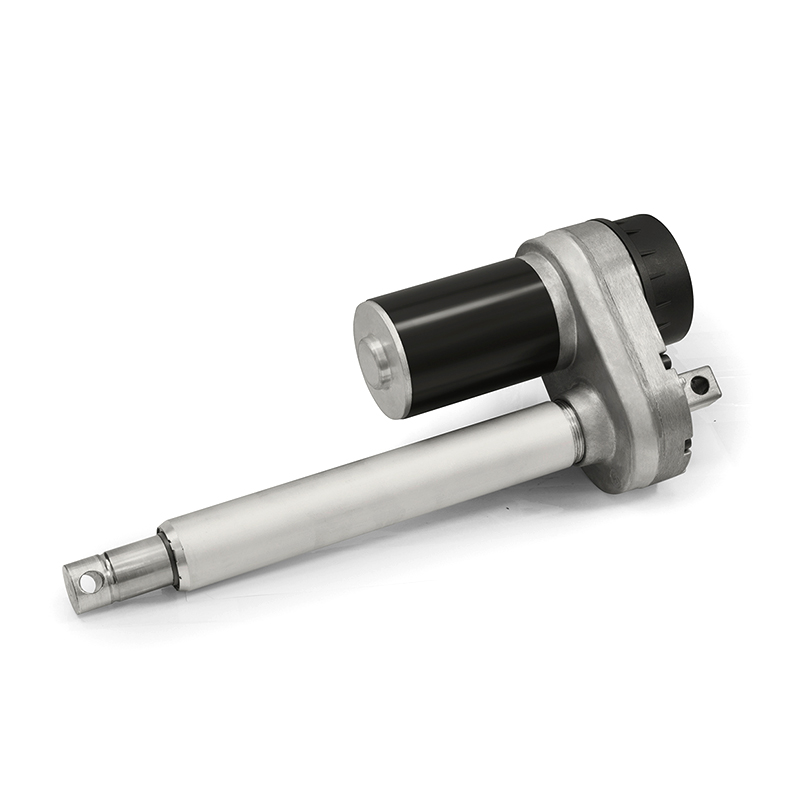
A DC linear actuator is an electromechanical device that converts the rotational motion of a DC motor into straight-line (linear) movement. Unlike hydraulic or pneumatic actuators that rely on fluid or air pressure, DC linear actuators are powered entirely by direct current electricity, making them cleaner, easier to control, and far more practical for indoor and precision applications. The core mechanism typically involves a DC motor driving a lead screw or worm gear, which in turn pushes or pulls an extension rod in and out along a fixed axis.
Inside the housing, the motor spins when voltage is applied. This rotation is transferred through a gear train that reduces speed while multiplying torque, and the output is converted to linear motion through a threaded rod and nut assembly. When the polarity of the power supply is reversed, the motor spins in the opposite direction, retracting the rod. This simple, reliable mechanism is what makes DC linear actuators such a versatile choice across dozens of industries.
Key Components Inside a DC Linear Actuator
Understanding the internal components of a DC linear actuator helps you evaluate product quality, anticipate failure points, and select the right unit for demanding conditions. Every actuator shares a common set of core parts, though material quality and engineering tolerances vary widely between manufacturers.
- DC Motor: The power source of the actuator. Most units use permanent magnet DC motors rated between 6V and 36V. Higher voltage typically means more speed and power output.
- Gear Train: A series of reduction gears that lower the motor's RPM while increasing torque. The gear ratio directly affects the balance between speed and load capacity.
- Lead Screw and Nut: The threaded rod that converts rotational torque into linear displacement. Acme thread screws are common for their efficiency and self-locking properties.
- Extension Rod (Spindle): The external shaft that physically moves in and out. It is typically made of aluminum or stainless steel for corrosion resistance.
- Limit Switches: Built-in mechanical switches that automatically cut power when the rod reaches either end of its travel, preventing motor burnout and mechanical damage.
- Housing and Seals: The outer casing protects internal components. IP (Ingress Protection) rated housings use seals and gaskets to block dust and moisture for outdoor use.
Critical Specifications You Must Understand Before Buying
DC linear actuators are sold with a range of technical specifications that directly determine whether a unit is suitable for your application. Reading spec sheets correctly saves you from expensive mistakes and ensures reliable long-term performance.
Stroke Length
Stroke length refers to the maximum distance the extension rod can travel from fully retracted to fully extended. Common stroke lengths range from 1 inch to 40 inches or more. Always choose a stroke that matches your mechanical requirement — too short and the actuator won't complete the movement; too long and you'll have unnecessary bulk and cost.
Load Capacity (Force Rating)
Load capacity is measured in pounds (lbs) or Newtons (N) and defines the maximum push or pull force the actuator can exert. Most manufacturers provide separate ratings for dynamic load (force while moving) and static load (force while holding a position). Always apply a safety factor — if your application requires 200 lbs of force, select an actuator rated for at least 300 lbs to account for dynamic stress and real-world variability.
Speed
Actuator speed is given in inches per minute (IPM) or millimeters per second (mm/s) at no load. Speed and force are inversely related — a faster actuator typically delivers less torque, while a slower one provides greater force. For lifting or pushing heavy loads, prioritize force over speed. For automation tasks requiring quick movement of light loads, prioritize speed.
Voltage and Current Draw
DC linear actuators are available in 6V, 12V, 24V, and 36V configurations. The 12V version is the most widely used due to its compatibility with automotive systems, battery packs, and standard power supplies. Current draw increases under load — always check the stall current rating and ensure your power supply or battery can handle peak demand without voltage drops that could damage the motor.
Duty Cycle
Duty cycle is the percentage of time an actuator can operate continuously within a given period before it needs to rest and cool down. A 25% duty cycle means the unit can run for 1 minute and must rest for 3 minutes. Exceeding the duty cycle causes overheating and premature motor failure. For continuous-operation tasks, look for actuators with 50% or higher duty cycle ratings, or consider industrial-grade units with active cooling.
Comparing DC Linear Actuator Types by Application
Not all DC linear actuators are built the same. The right type depends on your specific operating environment, load requirements, and control needs. The table below outlines common actuator types and their best-fit use cases.
| Actuator Type | Key Feature | Best Use Case |
| Standard DC Actuator | Simple push/pull, limit switches | Furniture lifts, solar panel tilting |
| Feedback Actuator | Built-in potentiometer or encoder | Robotics, precise positioning systems |
| Heavy-Duty Actuator | High load rating, metal gears | Industrial machinery, agricultural equipment |
| Waterproof Actuator (IP66+) | Sealed housing, corrosion-resistant rod | Marine, outdoor, or wet environments |
| Micro Actuator | Compact size, low stroke | Medical devices, RC models, compact automation |
Common Real-World Applications of DC Linear Actuators
DC linear actuators are found in an extraordinarily wide range of products and systems. Their ability to provide controlled, repeatable linear motion with simple electrical input makes them indispensable across both consumer and industrial markets.
Furniture and Home Automation
Electric recliner chairs, adjustable standing desks, TV lift cabinets, and hospital beds all rely on DC linear actuators to provide smooth, motorized height and angle adjustments. In these applications, quiet operation, compact form factor, and reliable limit switching are the most important performance criteria.
Solar Tracking Systems
Single-axis and dual-axis solar panel tracking systems use DC linear actuators to tilt panels toward the sun throughout the day, maximizing energy capture. These actuators must withstand outdoor weather conditions, UV exposure, and temperature extremes, making IP65 or IP66 waterproof ratings and UV-stabilized materials essential specifications.
Automotive and Trucking
Truck tailgates, tonneau covers, convertible roof mechanisms, and cab tilt systems use heavy-duty 12V or 24V DC actuators. In these environments, resistance to vibration, temperature cycling, and mechanical shock is critical. Actuators with internal shock absorption and high-cycle ratings are preferred for vehicle applications.
Agricultural Equipment
Planter row units, seed gate controls, sprayer boom height systems, and tractor implement adjustments are increasingly being motorized with DC linear actuators. Agricultural actuators need high force ratings, sealed housings to block mud and moisture, and the ability to operate reliably in extreme temperature ranges from below freezing to summer heat.
Robotics and DIY Automation
Hobbyists and engineers building custom robots, CNC machines, and automation rigs frequently rely on feedback-enabled DC linear actuators. Potentiometer feedback allows a microcontroller such as an Arduino or Raspberry Pi to read the exact rod position and command the actuator to move to any point within its stroke with high precision.
How to Control a DC Linear Actuator
Control options for DC linear actuators range from basic manual switching to sophisticated closed-loop feedback systems. The right control method depends on how much precision and automation your application requires.
- DPDT Rocker Switch: The simplest control method. A double-pole, double-throw switch manually reverses polarity to extend or retract the actuator. Suitable for basic on/off applications with no intermediate positioning.
- Relay Module: Allows a microcontroller or PLC to switch actuator direction electronically. Widely used in Arduino and Raspberry Pi projects for automated control without direct high-current switching.
- H-Bridge Motor Driver: An H-bridge IC such as the L298N allows PWM speed control in addition to direction control, enabling variable-speed operation and smoother acceleration.
- Dedicated Actuator Controller: Purpose-built controllers offer features like preset position memory, synchronization of multiple actuators, remote control input, and soft start/stop functions for professional installations.
- Closed-Loop Feedback Control: Using a feedback actuator with a built-in potentiometer and a PID controller, the system continuously monitors rod position and adjusts motor output to hold or reach a target position with high accuracy.
Tips for Installing and Maintaining DC Linear Actuators
Proper installation and routine maintenance significantly extend the service life of a DC linear actuator and prevent unexpected failures in the field. Following best practices from the start avoids the most common causes of premature wear and mechanical stress.
- Use proper mounting hardware: Always mount the actuator using clevis brackets or pivot mounts at both ends to allow free articulation. Rigid, fixed mounting creates side-loading forces that damage the spindle and internal bearings over time.
- Avoid overloading: Never exceed the actuator's rated dynamic load capacity. Consistent overloading strips gears, burns out the motor, and voids the warranty. Size up to the next load rating if you're near the limit.
- Protect wiring connections: Use weatherproof connectors and strain relief fittings to prevent wire fatigue and short circuits caused by vibration or moisture ingress at the cable entry point.
- Lubricate the lead screw periodically: Apply a thin layer of lithium grease or silicone lubricant to the extension rod every six to twelve months, especially in dusty or outdoor environments, to reduce friction and prevent corrosion.
- Test limit switches regularly: Check that internal limit switches are functioning correctly by running the actuator through its full travel range. A malfunctioning limit switch can cause the motor to run continuously against a mechanical stop, causing rapid burnout.
Choosing the Right DC Linear Actuator for Your Project
Selecting the correct DC linear actuator comes down to matching the device's specifications precisely to your application's mechanical and electrical requirements. Start by defining your required stroke length, peak force load, operating voltage, and environmental conditions. From there, narrow your choices by duty cycle needs and control method. If your application involves precise intermediate positioning, a feedback actuator is worth the added cost. For simple open/close or up/down movements, a standard actuator with built-in limit switches is sufficient and more cost-effective.
Always buy from reputable manufacturers who provide complete specification sheets, clear IP ratings, and tested load data — not just marketing claims. Investing in a quality actuator upfront dramatically reduces downtime, replacement costs, and the risk of mechanical failure at a critical moment. Whether you're building a smart home system, an industrial machine, or a custom robotics project, the right DC linear actuator is a reliable and efficient solution for converting electrical power into precise, controllable movement.

-
Feedback
Related products

Hotline:0086-15869193920
Time:0:00 - 24:00
