

 English
 Deutsch
 italiano
 中文简体
中文简体
Author: Admin Date: 2026-07-08
Electric Motor Transaxles: Design, Selection, and Maintenance Guide
Content
- 1 What an Electric Motor Transaxle Actually Combines
- 2 Core Components Inside the Housing
- 3 Single-Speed Design and Why Multiple Gears Are Rarely Needed
- 4 Selecting the Right Transaxle for a Vehicle Application
- 5 Cooling Strategies and Their Impact on Reliability
- 6 Installation Considerations for Conversions and New Builds
- 7 Maintenance Practices That Extend Service Life
- 8 Matching a Transaxle to Your Specific Use Case
What an Electric Motor Transaxle Actually Combines
An electric motor transaxle integrates three functions that used to require separate components into a single housing: the electric drive motor, the reduction gearing, and the differential that splits power between the two drive wheels. In a conventional gasoline vehicle, the engine, transmission, and axle differential are typically distinct assemblies connected by driveshafts. In an electric vehicle built around a transaxle, all of this lives in one compact unit mounted directly at the axle, which is why the design has become the default architecture for most electric cars, many hybrid vehicles, and a growing number of electric golf carts, forklifts, and light utility vehicles.
This consolidation matters because electric motors behave very differently from internal combustion engines. An electric motor produces full torque almost instantly from a standstill and can safely spin at much higher RPM than a piston engine, which means the gearing needed to translate motor output into usable wheel speed and torque looks completely different from a traditional multi-speed transmission. Most electric transaxles use a single fixed gear ratio rather than multiple selectable gears, since the motor's wide torque band makes shifting largely unnecessary for everyday driving.
Core Components Inside the Housing
Opening up a typical electric transaxle reveals a fairly compact set of parts working together in a shared case. The electric motor sits at one end, usually a permanent magnet synchronous motor or an induction motor depending on the manufacturer's design priorities around efficiency, cost, and high-speed performance. Attached to the motor's output shaft is a reduction gear set, most commonly a two- or three-stage helical gear train, though some designs use planetary gearsets for a more compact footprint.
From the reduction gearing, power flows into an open or limited-slip differential, which allows the two drive wheels to rotate at different speeds during cornering while still receiving power from the single motor. Surrounding all of this is a lubrication system, usually a splash or low-pressure pump-fed system using a specific transaxle fluid formulated to handle both gear lubrication and, in many designs, some degree of motor cooling as well.
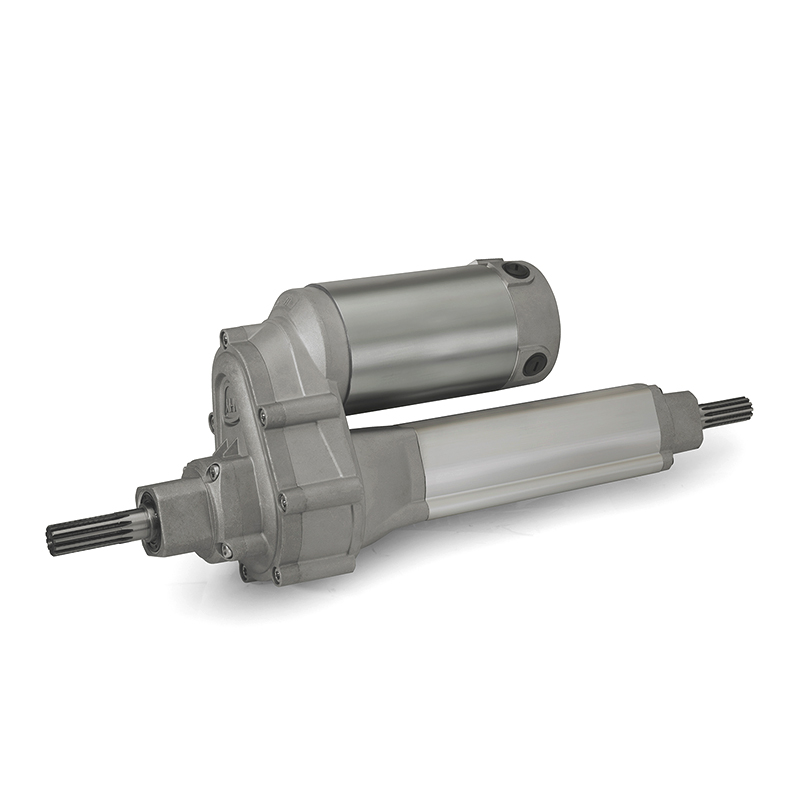
Main Subsystems to Know
- Electric drive motor, either permanent magnet or induction type
- Fixed-ratio reduction gear train, typically helical or planetary
- Open or limited-slip differential unit
- Integrated lubrication and cooling circuit
- Sealed bearing sets supporting the motor and output shafts
Single-Speed Design and Why Multiple Gears Are Rarely Needed
One of the most common questions from people transitioning from combustion vehicles is why electric transaxles almost never include a multi-speed transmission. The answer lies in the shape of an electric motor's torque and power curves. A gasoline engine only produces strong torque within a narrow RPM band, which is why multiple gears exist to keep the engine operating near that sweet spot across a wide range of vehicle speeds. Electric motors, by contrast, deliver near-maximum torque from zero RPM and maintain useful power output across a much broader speed range, often up to 15,000 or even 20,000 RPM in some designs.
Because of this, a single, carefully chosen gear ratio can cover acceptable performance from a standing start all the way to highway speeds without the added weight, cost, and mechanical complexity of shift mechanisms. A handful of high-performance electric vehicles do use two-speed transaxles to improve either low-end acceleration or top-speed efficiency, but this remains the exception rather than the rule across the broader market.
Selecting the Right Transaxle for a Vehicle Application
Choosing an electric motor transaxle for a new vehicle design or a conversion project requires matching several specifications to the intended use case rather than simply picking the highest-powered option available. Continuous power rating matters more than peak power for sustained applications like highway cruising or towing, since a transaxle that can only sustain its rated output for a few seconds before thermal throttling will disappoint in real-world use even if its peak number looks impressive on paper.
Gear ratio selection should be based on the target top speed and desired acceleration characteristics, since a shorter final drive ratio improves acceleration and hill-climbing ability at the cost of a lower maximum speed and slightly reduced highway efficiency, while a taller ratio does the opposite. Buyers should also confirm the differential type suits their application; an open differential is fine for typical passenger use, but performance vehicles or off-road applications benefit from a limited-slip or electronically controlled differential that better manages power delivery when one wheel loses traction.
Key Specifications to Compare
| Specification | Why It Matters |
| Continuous power rating | Reflects real sustained performance, not just brief peaks |
| Peak torque output | Determines acceleration and load-carrying capability |
| Final drive ratio | Balances acceleration against top speed and efficiency |
| Differential type | Affects traction control and handling behavior |
| Cooling method | Determines sustained performance under heavy load |
Cooling Strategies and Their Impact on Reliability
Heat management inside an electric transaxle directly affects both performance consistency and long-term reliability. Air-cooled designs, common in lower-power applications like golf carts and light utility vehicles, rely on airflow across finned housings and are simple and low-maintenance but limited in how much sustained power they can dissipate before performance tapers off. Liquid-cooled designs circulate coolant through channels surrounding the motor stator and sometimes through the gear housing itself, allowing sustained high-power operation without the thermal throttling that plagues air-cooled units under heavy or prolonged loads.
Some higher-performance transaxles use oil-based cooling that circulates the same fluid used for gear lubrication directly through or around the motor windings, which offers efficient heat transfer but demands careful fluid selection, since the oil must satisfy both the electrical insulation requirements of the motor and the extreme pressure lubrication needs of the gear train simultaneously. Buyers evaluating transaxles for demanding applications like commercial delivery vehicles or performance vehicles should specifically ask about sustained power ratings at realistic operating temperatures rather than relying solely on cold-start peak figures from a spec sheet.
Installation Considerations for Conversions and New Builds
For engineers working on electric vehicle conversions or custom low-volume vehicle builds, mounting an electric transaxle requires attention to several details beyond simply bolting it into place. Mount points must be engineered to handle the instant torque delivery of an electric motor, which can place higher peak stress on mounts than a comparable gasoline engine that builds torque more gradually. Rigid or poorly designed mounts can transmit excessive vibration and noise into the cabin, so many manufacturers specify hydraulic or elastomeric mounts tuned specifically for electric powertrain characteristics.
Half-shaft selection also deserves careful attention, since the constant velocity joints connecting the transaxle to the wheel hubs must be rated for the instant torque spikes an electric motor can deliver, particularly during aggressive acceleration from a standstill. Using half-shafts rated only for the average torque output rather than peak torque is a common cause of premature CV joint failure in converted vehicles.
Checklist Before Final Installation
- Confirm mount points are rated for instant torque delivery, not just static weight
- Verify half-shaft torque rating exceeds the transaxle's peak output
- Check coolant line routing for kinks or excessive bend radius
- Ensure motor position sensor wiring is shielded from high-voltage cable interference
- Confirm fluid fill levels and type match manufacturer specifications exactly
Maintenance Practices That Extend Service Life
Electric motor transaxles require far less routine maintenance than a traditional engine and transmission combination, but they are not entirely maintenance-free. Gear oil should be inspected and changed according to the manufacturer's schedule, since even a sealed system can accumulate metal particulates from normal gear wear over time, and degraded fluid loses its ability to protect both the gears and, in oil-cooled designs, the motor windings themselves.
Coolant systems in liquid-cooled transaxles need periodic inspection for leaks, proper coolant concentration, and clear airflow through the associated radiator, since a coolant system that quietly loses effectiveness can lead to gradual motor degradation long before any dramatic failure occurs. Bearing seals should also be checked periodically for signs of leakage, since a failed seal allowing gear oil to escape or contaminants to enter can quickly lead to accelerated wear throughout the unit.
Owners and fleet managers should keep a simple maintenance log tracking fluid changes, coolant top-offs, and any unusual noise or vibration reported by drivers, since electric transaxle problems often announce themselves through subtle changes in sound or smoothness well before a catastrophic failure occurs. Catching these early signs during routine service intervals is far less costly than replacing a damaged unit after a complete failure.
Matching a Transaxle to Your Specific Use Case
Ultimately, the best electric motor transaxle for any given project depends on matching continuous power, torque, gear ratio, and cooling capability to the actual demands of the vehicle in question rather than chasing the highest peak power figure available. A low-speed utility vehicle or golf cart benefits from a simple, air-cooled, low-power unit that minimizes cost and complexity, while a commercial delivery vehicle or performance-oriented build needs a liquid-cooled unit with a sustained power rating that reflects real operating conditions rather than brief test-bench peaks.
Buyers and engineers should request full datasheets covering continuous and peak power, torque curves across the RPM range, differential specifications, and cooling system details before committing to a specific transaxle, and should compare these figures directly against the demands of their intended application rather than relying on marketing summaries alone.

-
Feedback
Related products

Hotline:0086-15869193920
Time:0:00 - 24:00
