

 English
 Deutsch
 italiano
 中文简体
中文简体
Author: Admin Date: 2026-05-07
How Brushless DC Motors Are Revolutionizing Modern Engineering
Content
- 1 How Brushless DC Motors Work
- 2 Key Advantages Over Brushed Motors
- 3 Types of Brushless DC Motors
- 4 Common Applications Across Industries
- 5 Critical Specifications to Evaluate When Choosing a BLDC Motor
- 6 Motor Controller Selection and Integration
- 7 Maintenance and Long-Term Reliability
- 8 The Future of Brushless DC Motor Technology
How Brushless DC Motors Work
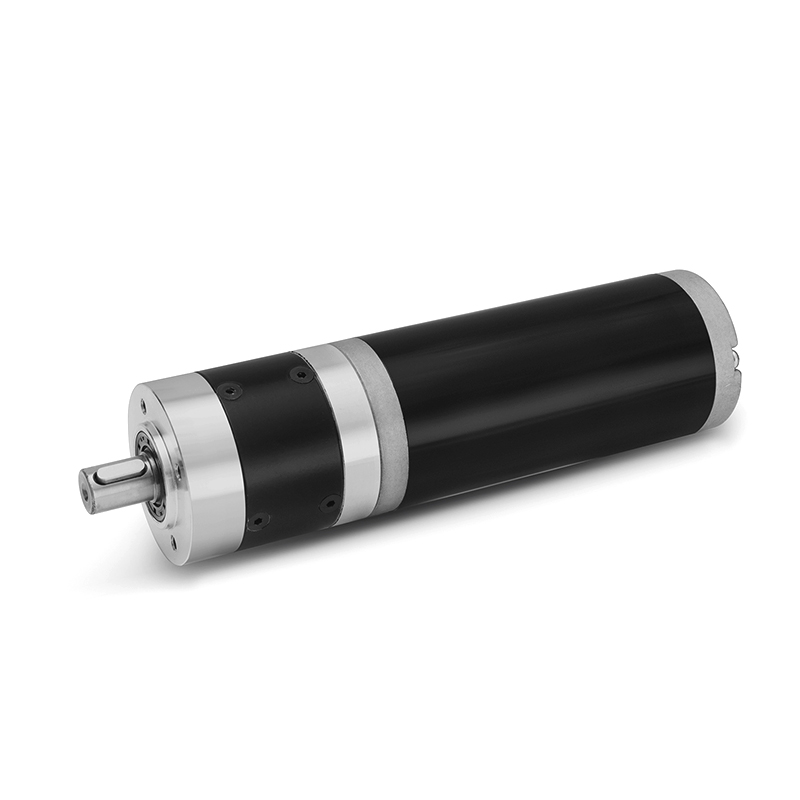
A brushless DC (BLDC) motor operates on the same fundamental principle as a traditional brushed motor — electromagnetic force drives rotation — but eliminates the mechanical brushes and commutator that are responsible for transferring current to the rotor. Instead, BLDC motors use electronic commutation controlled by a dedicated motor controller or ESC (electronic speed controller). Permanent magnets are mounted on the rotor, while the stator carries the windings. Sensors (typically Hall-effect sensors) or sensorless algorithms detect rotor position and switch the current through the stator coils in the correct sequence, generating a rotating magnetic field that pulls the rotor along.
This architecture removes the friction and electrical arcing associated with brushes, resulting in a motor that runs cleaner, cooler, and far more efficiently. The elimination of brushes also means there is no carbon dust, no regular brush replacement, and no radio-frequency interference caused by sparking contacts — all of which make BLDC motors significantly more suitable for precision environments.
Key Advantages Over Brushed Motors
Brushless DC motors outperform their brushed counterparts across nearly every measurable metric. Understanding these advantages helps engineers and product designers make informed decisions when selecting drive components.
- Higher efficiency: Without brush friction losses, BLDC motors typically achieve 85–95% efficiency, compared to 75–85% for brushed types. This directly translates to longer battery life in portable and electric-powered applications.
- Longer lifespan: The absence of brushes eliminates the most common wear point. BLDC motors can operate for tens of thousands of hours with minimal maintenance, making them ideal for embedded or hard-to-access installations.
- Higher torque-to-weight ratio: BLDC motors deliver more torque relative to their size and weight, enabling compact designs without sacrificing power output.
- Better speed control: Electronic commutation allows precise, smooth speed regulation across a wide RPM range, with excellent response to load changes.
- Reduced heat generation: Since resistive losses from brush contact are eliminated and heat is primarily generated in the stator (which is easier to cool), BLDC motors run at lower temperatures, protecting surrounding components.
- Low electromagnetic interference: No brush sparking means virtually no EMI, making BLDC motors suitable for sensitive electronic environments such as medical instruments or communication equipment.
Types of Brushless DC Motors
BLDC motors come in several configurations, each optimized for different performance characteristics and installation constraints. The two primary categories are defined by rotor placement relative to the stator.
Inrunner Motors
In an inrunner configuration, the rotor spins inside the stator. This design produces higher RPMs and is commonly used in applications requiring high rotational speed with lower torque, such as RC aircraft and high-speed spindles. Inrunners tend to have a narrower, longer form factor.
Outrunner Motors
Outrunner motors have the rotor wrapped around the outside of the stator. This arrangement generates higher torque at lower speeds, making outrunners popular in drone propulsion, electric bicycles, and direct-drive wheel motors. Their wider, flatter profile suits applications where mounting space is radially generous but axially limited.
Sensored vs. Sensorless
Sensored BLDC motors use Hall-effect sensors to provide real-time rotor position feedback, enabling smooth startup and consistent low-speed torque — critical for robotics or servo applications. Sensorless motors rely on back-EMF detection algorithms, reducing cost and complexity. They perform best at medium-to-high speeds and are widely used in fans, pumps, and power tools where the load is relatively predictable.
Common Applications Across Industries
The performance profile of brushless DC motors makes them a preferred choice across a remarkably broad range of industries. Their reliability, efficiency, and controllability open doors that brushed motors simply cannot.
| Industry | Application | Why BLDC? |
| Consumer Electronics | Hard disk drives, cooling fans | Low noise, long life, compact size |
| Automotive | EV traction motors, power steering | High efficiency, regenerative braking |
| Aerospace & Drones | UAV propulsion systems | High power-to-weight ratio, reliability |
| Medical | Surgical tools, infusion pumps | Low EMI, precision control, hygienic |
| Industrial Automation | Conveyor systems, CNC machines | Consistent torque, minimal maintenance |
| HVAC | Variable-speed compressors, blowers | Energy savings, speed flexibility |
Critical Specifications to Evaluate When Choosing a BLDC Motor
Selecting the right brushless DC motor requires a thorough understanding of both the application's demands and the motor's rated parameters. Mismatching these can lead to overheating, premature failure, or poor system performance.
KV Rating
The KV rating of a BLDC motor indicates the number of RPM the motor produces per volt of input with no load. A high KV motor (e.g., 2000 KV) spins fast but generates less torque, making it suitable for propeller-driven applications. A low KV motor (e.g., 100 KV) turns slowly but with high torque — ideal for direct-drive wheels or heavy loads.
Continuous and Peak Current Ratings
The continuous current rating defines how much current the motor can sustain indefinitely without damage. The peak current rating specifies the maximum it can tolerate for short bursts. Always ensure your controller and power supply are matched to both values, with sufficient headroom for startup inrush current.
Number of Poles
More magnetic poles produce smoother rotation at lower speeds but require faster electronic commutation. Motors with higher pole counts are well-suited for precision servo and positioning tasks, while low pole count motors favor high-speed applications.
Thermal Management
Even though BLDC motors run cooler than brushed equivalents, thermal management remains important in high-duty-cycle applications. Check the motor's rated operating temperature and consider whether passive cooling (heatsink mounting) or active airflow is needed for your installation environment.
Motor Controller Selection and Integration
A brushless DC motor is only as capable as the controller driving it. The motor controller handles electronic commutation, speed regulation, and often current limiting and braking. Selecting a well-matched controller is just as important as choosing the motor itself.
- Voltage and current compatibility: The ESC or motor driver must support the full voltage and peak current of the motor. Undersized controllers will overheat and fail rapidly under load.
- Control interface: Controllers accept different input signals — PWM, analog voltage, CAN bus, UART, or SPI. Choose one that integrates cleanly with your microcontroller or PLC environment.
- Closed-loop feedback: For precision applications, opt for controllers that support encoder or Hall sensor feedback for PID-based speed or position control.
- Regenerative braking support: In electric vehicles or energy-harvesting systems, regenerative braking returns kinetic energy to the battery. Confirm your controller supports this feature if needed.
- Protection features: Look for over-temperature, over-current, and under-voltage lockout protections to safeguard both the motor and the power source during fault conditions.
Maintenance and Long-Term Reliability
One of the most compelling arguments for BLDC motors in commercial and industrial settings is their reduced maintenance burden. With no brushes to replace, routine servicing is minimal compared to brushed motor systems. However, "low maintenance" does not mean "zero maintenance." Bearings are the most common failure point in brushless motors and should be inspected periodically, especially in high-vibration or high-duty environments. Lubrication intervals depend on bearing type, load, and operating speed — consult the motor datasheet for specific guidance.
Winding insulation should also be monitored in high-temperature applications over the long term. Thermal cycling can degrade insulation, leading to inter-winding short circuits. Using motors rated for appropriate insulation classes (Class F or H for demanding environments) significantly extends operational life. Additionally, keeping the motor clean and free from debris or moisture intrusion — particularly in outdoor or industrial settings — protects the stator windings and permanent magnets from corrosion or demagnetization.
The Future of Brushless DC Motor Technology
Brushless DC motor technology continues to evolve rapidly. Advances in permanent magnet materials — particularly the development of higher-grade neodymium magnets — are pushing energy density and torque output higher while reducing motor size and weight. Simultaneously, improvements in silicon carbide (SiC) and gallium nitride (GaN) power semiconductors are enabling motor controllers to switch faster, operate at higher voltages, and dissipate less heat, unlocking new levels of system efficiency.
The integration of artificial intelligence and adaptive control algorithms is another frontier. Smart motor controllers can now learn load profiles, predict maintenance needs, and dynamically adjust commutation strategies to optimize efficiency in real time. As electric vehicles, robotics, and renewable energy systems continue to scale globally, the brushless DC motor will remain a cornerstone technology — evolving from a precision engineering component to a ubiquitous element of the modern electrified world.

-
Feedback
Related products

Hotline:0086-15869193920
Time:0:00 - 24:00
