

 English
 Deutsch
 italiano
 中文简体
中文简体
Author: Admin Date: 2026-07-27
How Does a DC Geared Motor Deliver High Torque at Low Speed?
Content
- 1 What a DC Geared Motor Is and How It Differs From a Standard DC Motor
- 2 Core Components of a DC Geared Motor Assembly
- 3 How Gear Ratio Affects Speed and Torque Output
- 4 Typical Applications for DC Geared Motors
- 5 Key Factors to Consider When Selecting a DC Geared Motor
- 6 Maintenance Practices That Extend Motor Life
What a DC Geared Motor Is and How It Differs From a Standard DC Motor
A DC geared motor is a standard direct current motor combined with a gearbox, or gear reduction unit, attached directly to its output shaft. While a standard DC motor typically spins at a high rotational speed with relatively low torque, the addition of a gearbox reduces that output speed while proportionally increasing the available torque. This combination allows the motor to perform tasks that require slower, more controlled movement with greater rotational force, such as driving a conveyor roller or opening a heavy access panel, without needing an oversized motor to achieve the necessary torque on its own.
Because the gear reduction happens internally within a compact housing, DC geared motors offer a space-efficient solution for applications where both torque and a small overall footprint are important design considerations.
Core Components of a DC Geared Motor Assembly
Understanding the internal structure of a DC geared motor helps clarify why gear ratio selection has such a direct effect on performance characteristics like speed and torque output.
The DC Motor Unit
The motor unit converts electrical energy into rotational mechanical energy through the interaction of a magnetic field and current-carrying windings. Brushed DC motors use physical brushes and a commutator to control current direction, while brushless DC motors rely on electronic controllers to achieve the same effect with fewer moving parts and generally longer service life.
The Gear Reduction Unit
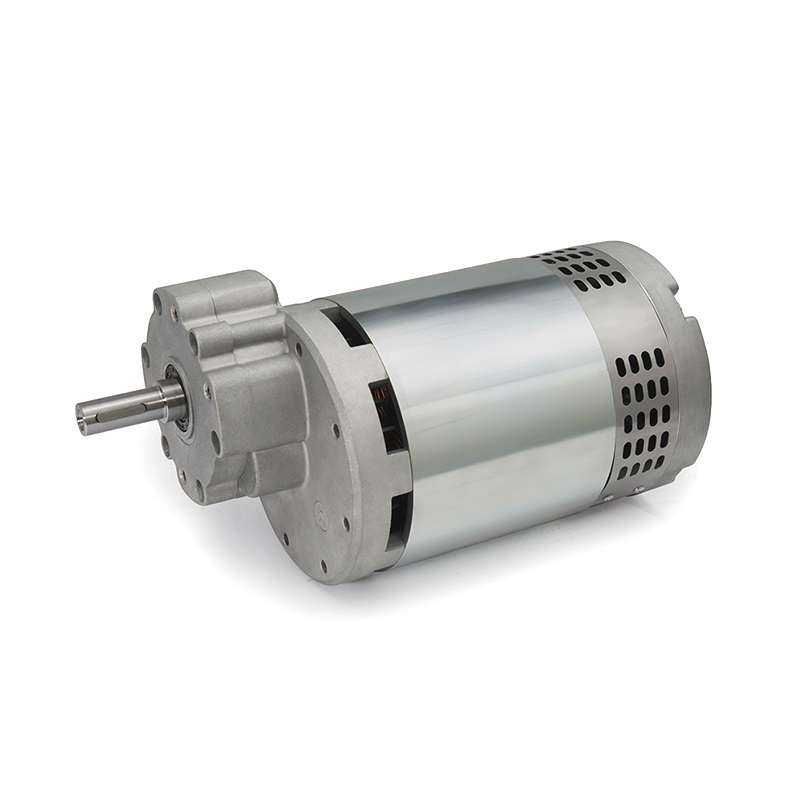
The gearbox contains a series of gears, often arranged in planetary, spur, or worm configurations, that reduce the high rotational speed of the motor shaft to a lower output speed while multiplying torque in the process. The specific gear ratio, expressed as a number like 10:1 or 50:1, determines exactly how much the speed is reduced and torque is increased relative to the motor's raw output.
Output Shaft and Mounting Interface
The output shaft transfers the final reduced-speed, increased-torque rotation to the connected mechanical load, while the mounting interface, whether flange-style or foot-mounted, allows the motor assembly to be securely attached to the equipment frame or chassis.
How Gear Ratio Affects Speed and Torque Output
The relationship between gear ratio, output speed, and torque follows a fairly direct mathematical pattern, which makes it possible to estimate performance characteristics before selecting a specific motor and gearbox combination.
| Gear Ratio | Relative Output Speed | Relative Output Torque |
| 5:1 | High | Moderate |
| 20:1 | Moderate | High |
| 50:1 | Low | Very High |
| 100:1 | Very Low | Maximum |
As the gear ratio increases, output speed decreases while torque increases proportionally, assuming mechanical losses within the gearbox remain constant. Engineers select a gear ratio based on the specific balance of speed and torque required for their application, rather than defaulting to the highest torque option available.
Typical Applications for DC Geared Motors
DC geared motors are used across a wide variety of equipment where controlled, low-speed movement with sufficient torque is required to move or hold a mechanical load.
- Automated door and gate systems requiring smooth, controlled opening and closing motion
- Conveyor systems in packaging and material handling lines that need consistent, low-speed roller movement
- Robotics and automated equipment requiring precise, repeatable positioning of mechanical arms or platforms
- Medical equipment such as hospital bed adjustment mechanisms and patient lift systems
- Home and industrial window blind or shade actuators that require quiet, low-speed operation
In each of these applications, the geared reduction allows a relatively small and affordable DC motor to generate enough torque to move the intended load, avoiding the cost and space demands of a larger, ungeared motor capable of the same torque output on its own.
Key Factors to Consider When Selecting a DC Geared Motor
Choosing the right DC geared motor for a specific application requires evaluating several interconnected performance and environmental factors.
Required Torque and Speed
Calculating the actual torque and speed needed to move the intended load is the starting point for motor selection, since choosing a gear ratio that provides insufficient torque can cause the motor to stall under load, while excessive torque relative to actual needs may unnecessarily increase cost and physical size.
Duty Cycle
Duty cycle refers to how frequently and for how long the motor operates within a given time period. Motors intended for continuous operation require different thermal management and construction considerations than those designed for brief, intermittent use, since prolonged operation generates more heat that must be dissipated to avoid premature failure.
Voltage and Power Supply Compatibility
DC geared motors are available in a range of voltage ratings, commonly from 6 volts to 24 volts or higher for industrial applications, so confirming compatibility with the available power supply is essential before finalizing a selection.
Environmental Conditions
Motors used in outdoor, humid, or dusty environments typically require a higher ingress protection rating and corrosion-resistant housing materials compared to motors used in clean, controlled indoor settings.
Maintenance Practices That Extend Motor Life
Routine maintenance helps DC geared motors continue operating reliably over their expected service life, particularly in applications involving frequent starts and stops or continuous duty cycles.
- Inspect and replace brushes periodically in brushed DC motor variants, since brush wear directly affects motor performance
- Check gearbox lubrication levels according to manufacturer recommendations, since insufficient lubrication accelerates gear wear
- Monitor for unusual noise or vibration, which can indicate misalignment or bearing wear within the gearbox
- Verify that mounting hardware remains secure, since vibration over time can loosen fasteners and cause shaft misalignment
- Keep ventilation openings free of dust and debris to support proper heat dissipation during operation
By combining careful upfront selection with a consistent maintenance routine, engineers and equipment operators can achieve dependable, long-term performance from DC geared motors across a wide range of industrial, commercial, and consumer applications.

-
Feedback
Related products

Hotline:0086-15869193920
Time:0:00 - 24:00
