

 English
 Deutsch
 italiano
 中文简体
中文简体
Author: Admin Date: 2026-04-09
Understanding DC Gear Motors: Working Principles, Selection, and Applications
Content
DC gear motors represent a fundamental component in modern automation, robotics, and mechanical systems where precise speed control and high torque output are essential. By combining the rotational power of a DC motor with the mechanical advantage of a gearbox, these integrated devices deliver the torque multiplication and speed reduction needed for countless industrial, commercial, and consumer applications. Understanding the working principles, selection criteria, and proper application of DC gear motors enables engineers, designers, and technicians to specify the optimal solution for specific performance requirements while avoiding common pitfalls that lead to premature failure or inadequate performance. This comprehensive guide explores the technical fundamentals, practical considerations, and real-world applications that define successful DC gear motor implementation across diverse mechanical systems.
Fundamental Working Principles of DC Gear Motors
The DC gear motor combines two distinct mechanisms working in concert to convert electrical energy into controlled mechanical motion. The DC motor component operates on electromagnetic principles, where current flowing through a coil positioned within a magnetic field creates rotational force through the interaction of these magnetic fields. In brushed DC motors, commutator segments and brushes reverse the current direction in the armature coils at precise intervals, maintaining continuous rotation in a consistent direction. Brushless DC motors achieve the same result through electronic commutation using Hall effect sensors and solid-state switching, eliminating the mechanical wear associated with brush contact while improving efficiency and reliability.
The gearbox component mechanically transforms the motor's high-speed, low-torque output into lower speed with proportionally increased torque. This transformation occurs through gear trains consisting of multiple meshing gears with different diameters and tooth counts. When a small gear drives a larger gear, the rotational speed decreases while the torque increases proportionally to the gear ratio. Multiple gear stages can be cascaded to achieve substantial speed reductions and torque multiplication, with common DC gear motors incorporating anywhere from single-stage reduction up to complex planetary or worm gear arrangements achieving ratios exceeding 1000:1.
The gear ratio fundamentally determines the relationship between motor input speed and output shaft speed, calculated as the ratio of motor RPM to gearbox output RPM. A 50:1 gear ratio means the motor shaft rotates 50 times for each single rotation of the output shaft. This speed reduction correspondingly multiplies the available torque by the same ratio, minus losses to friction and inefficiency. Understanding this inverse relationship between speed and torque proves crucial for proper motor selection, as applications requiring high torque at low speeds demand higher gear ratios, while those prioritizing speed over torque utilize lower ratios or direct-drive configurations.
Efficiency considerations impact overall system performance significantly, as both the motor and gearbox introduce energy losses that reduce output power relative to electrical input. DC motors typically achieve efficiencies between 60-90% depending on design quality, operating point, and load conditions. Gearboxes add additional losses through gear mesh friction, bearing resistance, and lubricant churning, with efficiency varying by gear type: spur gears typically achieve 90-95% per stage, planetary gears 85-95%, and worm gears 40-85% depending on reduction ratio and design. These cumulative losses must be accounted for when sizing motors and calculating power requirements for specific applications.
Types of Gearboxes Used in DC Gear Motors
Spur gear reducers represent the most common and cost-effective gearbox type, utilizing straight-toothed gears mounted on parallel shafts to achieve speed reduction. These gearboxes offer excellent efficiency, typically 90-95% per stage, and can achieve compact designs when multiple stages are stacked in series. Spur gears produce some noise during operation due to the instantaneous tooth engagement along the entire face width, making them less suitable for noise-sensitive applications. The parallel shaft configuration results in an offset between input and output shafts, which may require additional design consideration in space-constrained installations. Spur gear motors excel in applications prioritizing efficiency, cost-effectiveness, and where moderate noise levels are acceptable.
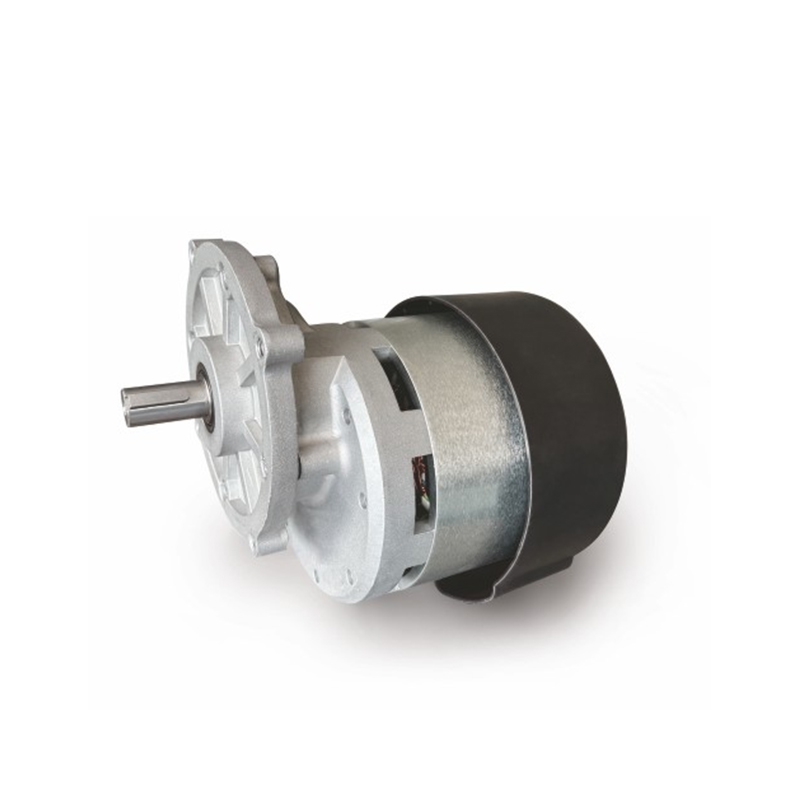
Planetary gear reducers provide high torque density in compact configurations, making them ideal for space-limited applications requiring substantial torque output. The planetary design features a central sun gear surrounded by multiple planet gears that mesh with an outer ring gear, distributing load across multiple gear meshes simultaneously. This load sharing enables planetary gearboxes to handle higher torques in smaller packages compared to spur gear equivalents. Planetary configurations also offer coaxial input and output shafts, simplifying mechanical integration in many applications. The complexity of planetary gear manufacture results in higher costs compared to spur gears, though the space and performance advantages justify this premium in demanding applications such as robotics, medical devices, and aerospace actuators.
Worm gear reducers achieve high reduction ratios in single stages, commonly providing ratios from 10:1 up to 100:1 or more in a compact, right-angle configuration. The worm gear design features a threaded worm shaft meshing with a worm wheel, creating a self-locking characteristic in many configurations where the output shaft cannot back-drive the motor. This self-locking property proves valuable in positioning applications like hoists and gate operators where loads must remain stationary without continuous motor power. However, worm gears suffer from lower efficiency compared to other gear types, particularly at high reduction ratios where sliding friction becomes significant. Proper lubrication proves critical for worm gear longevity, as the sliding contact generates heat that can degrade lubricants and accelerate wear.
| Gearbox Type | Efficiency Range | Typical Ratio Range | Key Advantages |
| Spur Gear | 90-95% per stage | 3:1 to 10:1 per stage | High efficiency, low cost |
| Planetary | 85-95% | 3:1 to 10:1 per stage | Compact, high torque density |
| Worm Gear | 40-85% | 10:1 to 100:1 single stage | Self-locking, right-angle drive |
Critical Selection Parameters and Specifications
Torque requirements represent the primary specification driving DC gear motor selection, as the motor must produce sufficient output torque to overcome load resistance, friction, and inertia throughout the operating cycle. Calculate the torque requirement by considering the maximum load force, mechanical advantage of the driven mechanism, friction coefficients, and desired acceleration rates. Safety factors typically ranging from 1.5 to 3.0 should be applied to account for peak loads, starting torque, and unexpected resistance. The selected gear motor's continuous and peak torque ratings must exceed these calculated requirements with appropriate margins to ensure reliable operation without overheating or stalling.
Speed requirements determine the necessary gear ratio to achieve desired output shaft RPM from available motor speeds. Standard DC motors operate at base speeds ranging from 1,500 to 10,000 RPM depending on voltage and design, far exceeding most application requirements. Dividing the motor base speed by the desired output speed yields the required gear ratio, though standard ratios may not precisely match calculated values. In such cases, selecting the nearest standard ratio and accepting minor speed variation, or utilizing speed control through voltage or PWM modulation, accommodates the discrepancy. Applications requiring precise speed control benefit from closed-loop feedback systems using encoders or tachometers to maintain accurate speeds regardless of load variations.
Duty cycle and thermal management considerations impact motor sizing significantly, as continuous operation at high loads generates heat that can damage windings and degrade performance. Motors rated for continuous duty can operate indefinitely at rated load, while intermittent duty motors require periodic rest periods for cooling. The duty cycle specification indicates the percentage of time the motor operates within a defined period, such as 30% duty cycle meaning 30 seconds on followed by 70 seconds off per 100-second cycle. Applications with high duty cycles or continuous operation require motors with robust thermal design including enhanced cooling, higher temperature insulation materials, and conservative current ratings to prevent overheating failures.
Voltage and current specifications must match available power supplies while providing adequate performance margins. Common DC gear motor voltages include 12V, 24V, 48V, and higher industrial voltages, with selection often driven by available power infrastructure. Higher voltage motors achieve given power levels with lower currents, reducing resistive losses in conductors and improving efficiency. Current ratings indicate the motor's electrical demand under various load conditions, with stall current representing the maximum current drawn when the motor is prevented from rotating. Power supply and control electronics must handle these peak currents without voltage sag or component damage, requiring proper sizing and protection circuits including fuses, current limiting, and thermal monitoring.
Common Applications Across Industries
Robotics and automation systems extensively utilize DC gear motors for joint actuation, gripper operation, and precise positioning tasks where compact size, controllability, and high torque density prove essential. Collaborative robots employ integrated gear motors with position feedback to achieve safe, accurate movements in proximity to human workers. Automated guided vehicles rely on gear motors for wheel drive, steering, and lifting mechanisms that navigate warehouses and manufacturing facilities. The ability to precisely control speed, position, and torque through electronic motor controllers makes DC gear motors ideal for complex motion profiles and coordinated multi-axis systems characteristic of modern automation equipment.
Automotive applications incorporate DC gear motors in numerous subsystems including power windows, seat adjusters, sunroof mechanisms, and windshield wiper drives. These automotive gear motors must withstand extreme temperature variations, vibration, and millions of operating cycles while maintaining reliable performance. Window lift motors typically employ worm gear reducers for their self-locking characteristics that prevent windows from falling when power is removed. Seat adjustment systems utilize multiple gear motors enabling independent control of seat position, backrest angle, and lumbar support for optimal driver comfort. The automotive industry's stringent quality requirements and cost pressures drive continuous improvements in DC gear motor reliability, efficiency, and manufacturability.
Medical device applications demand exceptional reliability, quiet operation, and precise control, requirements well-suited to high-quality DC gear motors. Surgical robots employ miniature gear motors providing the torque and precision needed for minimally invasive procedures. Hospital bed actuators use gear motors to adjust bed position, height, and articulation for patient comfort and caregiver accessibility. Portable medical equipment including insulin pumps, ventilators, and diagnostic devices integrates small DC gear motors for fluid metering, valve control, and mechanism actuation. The medical industry's regulatory requirements necessitate extensive documentation, traceability, and validation testing for gear motors used in critical applications affecting patient safety.
Consumer products leverage DC gear motors for countless applications where affordability, compact size, and adequate performance outweigh the need for industrial-grade specifications. Electric toothbrushes, kitchen appliances, toys, and personal care devices incorporate small gear motors providing the mechanical power for their intended functions. Home automation systems use gear motors for motorized blinds, smart locks, and adjustable furniture that enhance convenience and accessibility. The consumer market's price sensitivity drives gear motor manufacturers to optimize designs for cost-effective production while maintaining acceptable performance and reliability for typical consumer duty cycles and operating environments.
Installation Best Practices and Mechanical Integration
Proper mounting and alignment ensure optimal gear motor performance and longevity by preventing excessive loads on bearings and gears. The motor should be securely fastened to a rigid mounting surface using appropriate hardware and maintaining specified bolt torques. Flexible or vibrating mounts introduce dynamic loads that accelerate bearing wear and can cause gear mesh problems. When coupling the output shaft to driven mechanisms, maintain precise alignment within manufacturer specifications, typically requiring angular misalignment below 1 degree and parallel offset less than 0.25mm for rigid couplings. Flexible couplings tolerate greater misalignment but should still be minimized to prevent premature failure and vibration.
Load coupling methods significantly impact gear motor service life, with proper coupling design distributing forces evenly and accommodating normal operating variations. Direct shaft coupling provides the most compact and efficient connection but requires precise alignment and may transmit shock loads directly to the gear train. Belt and pulley systems offer some shock isolation and allow speed ratio adjustment through pulley sizing, though efficiency decreases due to belt slip and friction. Chain drives provide positive engagement without slip while tolerating modest misalignment, suitable for applications requiring guaranteed speed ratios and ability to handle contaminated environments where belt drives might fail.
Environmental protection considerations include shielding the motor from moisture, dust, chemicals, and temperature extremes that degrade performance and reliability. Totally enclosed motors with sealed bearings and shaft seals prevent contaminant ingress in dirty or wet environments, though this design reduces cooling effectiveness requiring derating for continuous operation. IP (Ingress Protection) ratings quantify environmental protection levels, with IP54 or higher recommended for industrial applications involving dust or moisture exposure. Temperature extremes affect both motor electrical characteristics and gearbox lubrication, requiring special materials and lubricants for operation outside standard -20°C to +50°C ranges typical of commercial products.
Key Installation Considerations
- Mount motor rigidly to prevent vibration and ensure proper gear mesh alignment
- Maintain shaft alignment within manufacturer specifications to prevent bearing overload
- Select appropriate coupling method balancing efficiency, shock isolation, and misalignment tolerance
- Provide adequate ventilation for motor cooling, especially in enclosed installations
- Protect motor from environmental hazards using sealed enclosures or appropriate IP ratings
- Verify electrical connections are secure and properly sized for motor current requirements
Maintenance Requirements and Troubleshooting
Regular maintenance extends gear motor service life and prevents unexpected failures that disrupt operations. Lubrication maintenance proves critical for gearboxes, with grease-lubricated units requiring periodic regreasing at intervals specified by the manufacturer, typically ranging from 1,000 to 5,000 operating hours depending on load, speed, and environmental conditions. Oil-lubricated gearboxes require monitoring oil level and condition, changing oil when contamination or degradation becomes evident. Worm gear units prove particularly sensitive to lubrication condition due to the sliding contact between worm and wheel, requiring high-quality lubricants formulated specifically for worm gear applications to minimize wear and maximize efficiency.
Brush inspection and replacement applies to brushed DC motors, where carbon brushes gradually wear through mechanical contact with the commutator. Brush length should be checked periodically, with replacement required when wear reduces brush length below minimum specifications, typically when 30-40% of original length remains. Worn brushes increase electrical resistance, reduce motor performance, and can damage the commutator if allowed to wear completely. Commutator condition should also be inspected for grooving, pitting, or buildup of carbon debris that impairs electrical contact. Light commutator wear can be addressed through cleaning and polishing, while severe damage requires professional refurbishment or motor replacement.
Common troubleshooting scenarios include motor not starting, which may result from power supply issues, broken connections, or seized bearings preventing rotation. Verify power supply voltage and current capacity, inspect wiring for continuity, and manually check if the motor shaft rotates freely. Excessive noise often indicates bearing wear, gear damage, or misalignment, requiring inspection of these components to identify the source. Overheating suggests excessive load, inadequate cooling, or electrical problems such as short circuits or unbalanced phases in brushless motors. Thermal imaging can identify hot spots indicating specific failure modes requiring targeted corrective action.
Performance degradation over time manifests as reduced speed, lower torque output, or increased current consumption at given loads. These symptoms may indicate brush wear, bearing deterioration, or gearbox lubrication breakdown. Periodic performance testing comparing current operation against baseline measurements helps identify gradual degradation before catastrophic failure occurs. Vibration analysis detects developing problems including bearing wear, gear damage, and imbalance, enabling condition-based maintenance that addresses issues before they cause unexpected downtime. Implementing systematic maintenance records tracking operating hours, maintenance activities, and performance trends supports predictive maintenance strategies that optimize reliability while minimizing maintenance costs.
DC gear motors represent versatile, reliable solutions for countless motion control applications across diverse industries and operating environments. Understanding their working principles, specification requirements, and proper application enables engineers and technicians to select optimal products delivering required performance, reliability, and value. Through proper installation, maintenance, and troubleshooting practices, DC gear motors provide years of dependable service supporting the mechanical systems that drive modern technology, manufacturing, and everyday convenience. As motor and gearbox technologies continue advancing with improved materials, manufacturing processes, and control electronics, DC gear motors will remain essential components enabling precise, powerful, and efficient mechanical motion across an ever-expanding range of applications.

-
Feedback
Related products

Hotline:0086-15869193920
Time:0:00 - 24:00
