

 English
 Deutsch
 italiano
 中文简体
中文简体
Author: Admin Date: 2026-01-12
What’s the Difference Between Covered and Uncovered DC Geared Motors?
Content
- 1 Design and Structural Differences
- 2 Protection Against External Factors
- 3 Maintenance and Serviceability
- 4 Performance and Heat Dissipation
- 5 Noise and Vibration Control
- 6 Cost Considerations
- 7 Application Suitability
- 8 Comparison Table: Covered vs Uncovered DC Geared Motors
- 9 Conclusion: Making the Right Choice
DC geared motors are widely used in robotics, automation, and small machinery due to their ability to provide high torque at low speeds. These motors come in two primary configurations: covered (enclosed) and uncovered (open-frame). Understanding the differences between these types is essential for selecting the right motor for your application, ensuring durability, performance, and safety. This article explores the distinctions, advantages, and practical considerations when choosing covered versus uncovered DC geared motors.
Design and Structural Differences
The primary distinction between covered and uncovered DC geared motors lies in their structural design. Covered motors feature an outer casing or cover that encloses the gear assembly and motor components, providing protection against dust, debris, and accidental contact. This cover may be made of metal or durable plastic, depending on the application requirements.
Uncovered motors, in contrast, have exposed gears and mechanical parts. While this design can allow for easier inspection and maintenance, it leaves the motor more vulnerable to environmental contaminants, physical damage, and interference during operation.
Protection Against External Factors
Covered DC geared motors offer significant protection against external factors such as dust, moisture, and accidental contact. The enclosure minimizes the risk of foreign objects entering the gear train, which can cause premature wear or mechanical failure. For industrial or harsh environments, the covered design extends motor lifespan and reduces maintenance requirements.
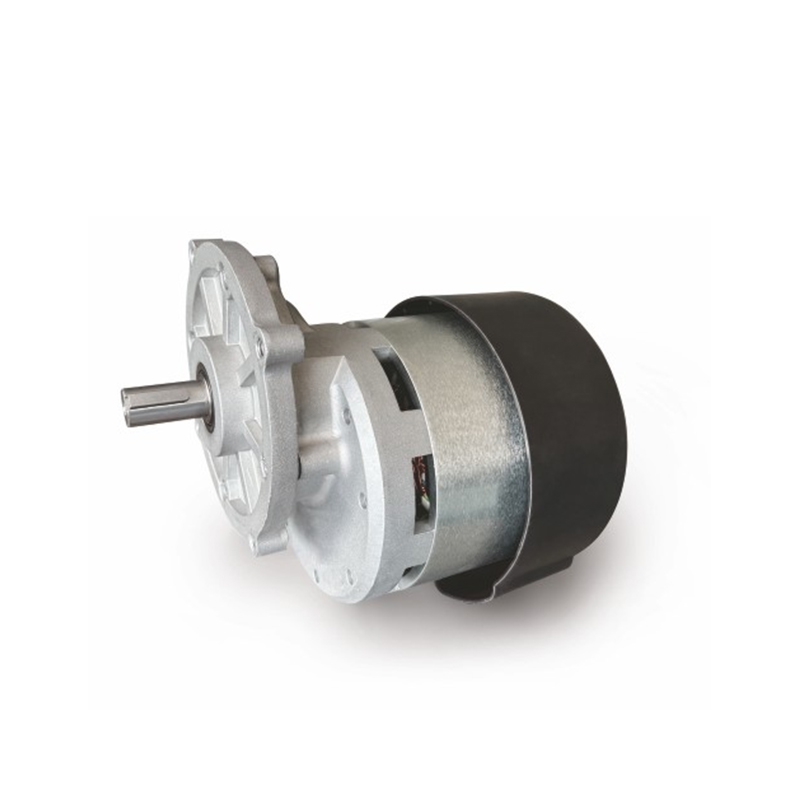
Uncovered motors, however, are better suited for controlled environments where contamination is minimal. Without a protective cover, the gear mechanism is directly exposed to dust, debris, or fluids, making it necessary to implement additional preventive measures, such as regular cleaning or placement inside a protective housing.
Maintenance and Serviceability
Covered motors typically require less frequent maintenance due to the protective enclosure shielding internal components. Lubrication schedules may be longer, and routine inspections are simplified since the cover prevents external contamination. Many covered motors include removable panels or ports to access gears and bearings without fully disassembling the motor.
Uncovered motors allow for easier visual inspection and direct access to gears and shafts, which can be beneficial for applications requiring frequent adjustments or lubrication. However, this ease of access comes at the cost of increased exposure, requiring more diligent maintenance practices to ensure optimal performance.
Performance and Heat Dissipation
Both covered and uncovered DC geared motors provide similar mechanical performance in terms of torque, speed, and efficiency. However, the presence of a cover can influence heat dissipation. Covered motors may retain more heat due to restricted airflow, making thermal management an important consideration for continuous operation or high-load applications.
Uncovered motors generally dissipate heat more efficiently because the gear and motor components are exposed to ambient air. This can be advantageous in applications with high duty cycles, but the trade-off is increased vulnerability to environmental contaminants that could affect performance.
Noise and Vibration Control
The cover of a DC geared motor can also serve as a sound and vibration dampening mechanism. Enclosed designs typically reduce operational noise by containing gear movement and motor vibrations within the casing. This feature is particularly valuable in office equipment, home appliances, or robotics where noise levels are a concern.
Uncovered motors may produce more audible noise due to the lack of a protective enclosure. While this is not a performance issue per se, it can be a consideration for applications requiring low-noise operation or in environments where sound control is critical.
Cost Considerations
Covered DC geared motors are generally more expensive than uncovered variants due to additional materials, manufacturing complexity, and integrated protective features. The higher upfront cost is often offset by reduced maintenance, longer lifespan, and lower downtime in challenging operating conditions.
Uncovered motors are typically more affordable and may be sufficient for projects in controlled environments where protection is less critical. Choosing an uncovered motor can reduce initial investment but may increase long-term maintenance costs if protective measures or frequent servicing are required.
Application Suitability
The choice between covered and uncovered DC geared motors largely depends on the intended application. Covered motors are preferred in industrial machinery, outdoor robotics, or automated systems exposed to dust, debris, or moisture. They provide reliability and minimize the risk of operational interruptions.
Uncovered motors are often used in hobby projects, educational robotics, or laboratory setups where environmental control is sufficient. Their accessible design simplifies modifications, direct monitoring, and rapid prototyping.
Comparison Table: Covered vs Uncovered DC Geared Motors
| Feature | Covered Motor | Uncovered Motor |
| Protection | High | Low |
| Maintenance | Low frequency | High frequency |
| Heat Dissipation | Moderate | High |
| Noise | Lower | Higher |
| Cost | Higher | Lower |
| Application Environment | Harsh or industrial | Controlled or hobby use |
Conclusion: Making the Right Choice
Selecting between a covered and uncovered DC geared motor requires balancing protection, maintenance, thermal management, noise, and cost. Covered motors are ideal for demanding environments and long-term reliability, while uncovered motors provide accessibility and affordability for controlled or experimental settings. Understanding these differences ensures that your project or production system achieves optimal performance, durability, and efficiency.
By carefully considering environmental conditions, operational requirements, and maintenance preferences, engineers and hobbyists can make an informed choice that aligns with both performance expectations and budget constraints. Both types of DC geared motors have unique advantages that serve specific applications effectively.

-
Feedback
Related products

Hotline:0086-15869193920
Time:0:00 - 24:00
